
The Mystery of the History
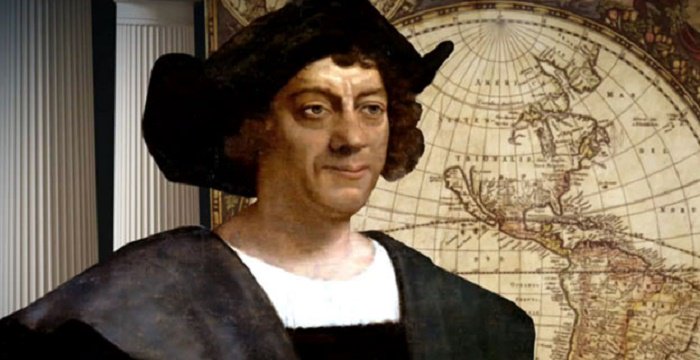
Portrait (1519) said to be Christopher Columbus by Sebastiano del Piombo (Sebastiano Luciani)
By Forty-Five Funk Staff
July 22, 2021.
Updated May 7, 2026.
Powerful entities that control governments, influence institutions, and control the lives of the masses, are able to dictate the way history is portrayed in mass media. Scholars and other academic researchers are not able to regulate the way history is inaccurately portrayed on film, television, and journalism. Those inaccuracies are attributed to ‘creative license’ or justified as being necessary to in order to make storylines more entertaining. Influential people favor their own perspectives over those that do not appear to have the power to do anything about it.
If we start with the reasons why people desire to control history, a good starting point is the book, Ethnocentrism: Integrated Perspectives, by Boris Bizumic. The author states that, “The first aim of the book is to reinvigorate the concept of ethnocentrism…the term has been used since at least the 1870s … it was recently replaced by other concepts such as prejudice, ingroup favoritism, ingroup bias, and discrimination, possibly because of the conceptual confusion in the field and because the concept has meant many things to different researchers and theorists.” With that being said, ethnocentrism can loosely be defined as ‘someone favoring or calling their own ethnic group better than others.’
Who tells the story when another culture is being observed and documented by outsiders? The book, Sick Societies: Challenging the Myth of Primitive Harmony, by Robert B. Edgerton questions whether research tells the full story. The research done by outsiders is biased and social scientists admit this. That particular researcher/ reporter omits certain behavior. If that is the case, is field research completely accurate? Edgerton details the problems with providing accurate research. Unless we know the answer firsthand, we must question the bias that field research inherently contains.
James W. Loewen is the author of the groundbreaking book, Lies My Teacher Told Me: Everything Your American History Textbook Got Wrong. Loewen states how, “Sometimes the information that textbooks impart is completely correct. Sometimes it is flatly wrong. And sometimes we-the community of scholars-just don’t know for sure.” Most information that is taught in textbooks is taken for fact, without any attempt to question the validity of the information. Loewen asserts that we should ask questions and be willing to look further into what we read.
There are many instances where periods of uncertainty are merged together with facts. The nature of history itself is masked by mystery, and gaps exist within the historic information. The book, Lies My Teacher Told Me, further states how, “Instead of teaching such items as facts or omitting them as false, textbooks and teachers should present them as hypotheses. Then students could learn how to marshal evidence on each side, come to a conclusion, but still reserve room for doubt.” Loewen rightly pointed out that educators should encourage a balanced approach when information is presented. Balance is proper, but not emphasized enough.
A final point that we will mention from Loewen’s book, Lies My Teacher Told Me, is the way journalism has been influenced by techniques used in entertainment, stating, “Moreover, television news programs have learned that booking flamboyant extremists on each side makes for more entertaining viewing, hence higher ratings, than serious journalism. Again, this means less real news gets presented, and the various viewpoints that remain seem to be presented as moral and factual equivalents.” Real journalism has been secondary for a long time. We have to ask, why has U.S. journalism been allowed to morph into being another form of entertainment?